
The Mechanics of Electric Hot Water Systems: A Comprehensive Pro/Con Analysis

Electric hot water systems are central to modern household utilities, yet the technology is evolving rapidly under pressure from efficiency demands and rising energy costs. Understanding the core mechanism, benefits, and drawbacks of the three main types—Storage Tank, Instantaneous, and Heat Pump—is crucial for making an informed investment decision. This expert analysis breaks down the functionality and performance metrics of each system.
I. Core Types of Electric Hot Water Systems
The electric water heating sector is divided into three distinct operational models:
1. Storage Tank Systems
This is the dominant electric hot water solution in many households, particularly in Australia. These units utilize electric heating elements to prepare and maintain a large volume of water at a preset temperature (typically 60°C) within an insulated tank. They are designed to manage continuous, high demand during household peak times but are inherently subject to energy losses.
2. Instantaneous (Tankless/Continuous Flow) Systems
Favored for their energy efficiency and compact size, instantaneous heaters operate purely on demand. Cold water is only heated as it flows through the unit when an outlet is opened. This method minimizes standing heat loss but can lead to a slight lag or inconsistent temperatures if household demand exceeds the unit's heating capacity.
3. Electric Heat Pump Systems
Functioning more like an inverted air conditioner, heat pumps use electricity to transfer existing heat from the surrounding air into the water tank. This makes them the most energy-efficient electric option. However, their complexity can lead to more frequent maintenance issues, and the sourcing of specialized replacement components can sometimes be problematic.
II. Deep Dive: Electric Storage Tank Heaters
Mechanism of Operation
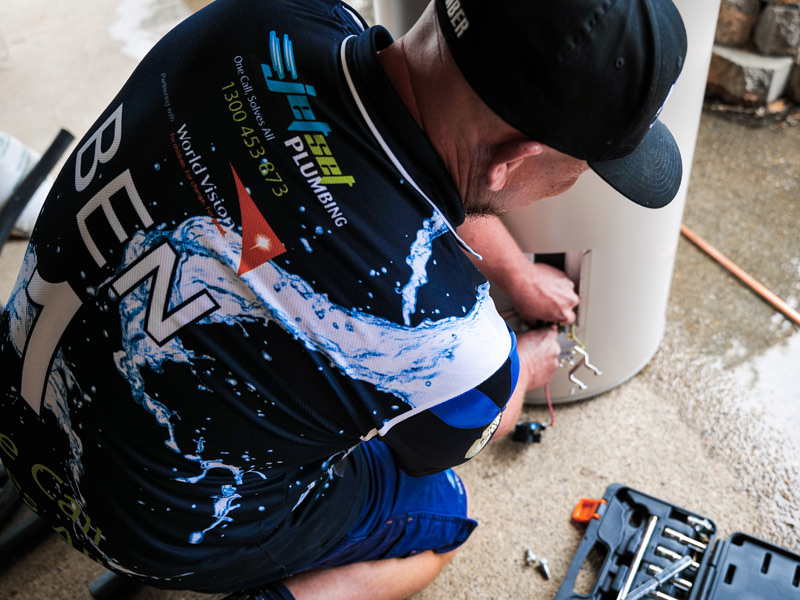
An electric storage system typically contains one or two electrical elements positioned within the insulated tank. Cold water enters the base and is heated by these elements. Due to thermal stratification, the heated water naturally rises to the top, where it is held ready for delivery to fixtures like showers and sinks. Thermostats, often set to a minimum of $60^\circ \text{C}$ to inhibit bacterial growth, regulate the heating cycle. A pressure relief valve automatically manages any excessive internal water pressure, channeling water out through an overflow pipe.
Pros and Cons of Storage Tank Systems
✅ Benefits
- Low Initial Cost: Generally requires less upfront investment.
- Off-Peak Integration: Can be connected to off-peak energy tariffs, substantially reducing running costs.
- Installation Flexibility: Suitable for both indoor and outdoor placement.
- Durability and Reliability: Offers a long service life, typically $10$-$15$ years, and reliably maintains water pressure.
- Easy Installation: Readily available and relatively straightforward to install (requires both a plumber and an electrician).
❌ Limitations
- Energy Inefficiency: The least efficient design due to constant energy consumption required to compensate for heat loss (standby loss).
- High Running Costs: Can be very expensive if not utilizing off-peak energy tariffs.
- Space Requirement: Requires significant space for the large storage cylinder.
- Vulnerability: Loss of hot water supply during power outages (blackouts).
- Recovery Time: Can be slow to heat an entirely new tank volume.
III. Deep Dive: Instantaneous Water Heaters
Mechanism of Operation
Also known as continuous flow systems, these units are compact, space-saving innovations. They employ a heat exchanger (often a copper coil) that surrounds a high-powered electric element. When a hot water tap is opened, the sensor registers the flow, activating the element to heat the passing cold water immediately before it is delivered to the outlet.
Pros and Cons of Instantaneous Systems
✅ Benefits
- Exceptional Efficiency: Heats only when demand is present, eliminating standby energy loss associated with storage tanks.
- Space Maximization: Compact design saves significant installation space.
- Longevity: Generally offers a long operational lifespan due to reduced wear and tear on components.
- Flexible Installation: Can be installed both indoors and outdoors.
❌ Limitations
- Higher Initial Investment: The upfront purchase price can be double that of a standard storage unit.
- Installation Complexity: Requires both a plumber and an electrician, and can take longer due to specialized wiring needs.
- Flow Issues: May struggle to meet simultaneous, high household demand, potentially causing temperature inconsistency or a delay in supply.
- Maintenance: Prone to requiring more frequent, specialized maintenance.
- Vulnerability: Complete loss of hot water during power outages.
IV. Strategic Consideration: Is Electric Right for You?
While electric systems are reliable and comparatively straightforward to service, their long-term cost-effectiveness is under scrutiny due to escalating electricity prices. It is noteworthy that some jurisdictions are progressively phasing out electric storage systems due to their inherent inefficiency. In such cases, alternatives like gas or solar hot water systems may become the only available options.
Determining the ideal system requires a professional assessment of your household's specific consumption patterns, budget constraints, and geographical energy costs. For expert guidance and personalized recommendations, consulting a certified professional is strongly advised.
Frequently Asked Questions (FAQ)
Q: Are electric hot water systems being phased out?
A: Yes, in some locations, older electric **storage** hot water systems are being gradually phased out due to their high energy inefficiency. Alternatives like heat pumps, gas, and solar are often encouraged or mandated in new constructions or replacements.
Q: Which type of electric hot water system is the most energy efficient?
A: Electric **Heat Pump** systems are generally the most energy efficient, as they only use electricity to transfer existing heat from the air, rather than generating heat directly. Instantaneous heaters are the next most efficient, as they avoid standby heat loss.
Q: Can a storage tank heater save money by using off-peak electricity?
A: Yes. Many electric storage systems can be connected to specific circuits that only draw power during designated off-peak periods, when electricity rates are significantly lower. This can substantially reduce the long-term running costs, despite the system's inherent inefficiency.